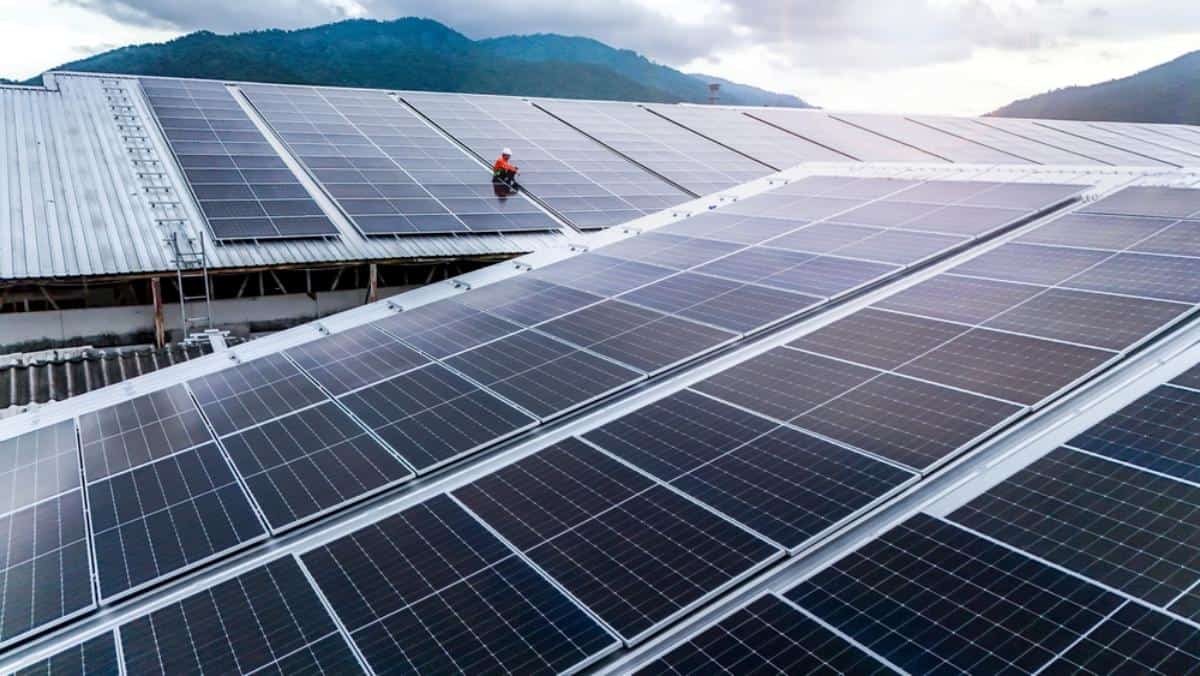
Solar Energy for Large-Scale Offices: A Sustainable Cost-Reduction Strategy #2
ยกระดับธุรกิจสู่ Green Business ด้วยโซล่าเซลล์สำหรับโรงงานขนาดใหญ่และสำนักงาน ตอบโจทย์มาตรฐานความยั่งยืน เพิ่มมูลค่าสินทรัพย์และภาพลักษณ์อาคารอัจฉริยะ

Unlocking Solar Energy Potential Minister of Industry, Mr. Akanat Promphan, is fast-tracking the “Solar Act” following a landmark decision to deregulate solar installations. Under the new framework, households and industrial factories will no longer be required to apply for a Factory Operation License (Rung 4) for solar panel installations; a simple notification to the relevant authorities will suffice. This initiative is part of a broader industrial reform targeting “New S-Curve” industries to drive the economy, with a goal of boosting GDP by 1%.

Ministerial Keynote at OIE Forum Presiding over the 16th OIE Forum, titled “Industrial Reform: Transforming Thai Industry toward a New Economic Era,” Mr. Akanat Promphan addressed the complex challenges facing the Thai industrial sector. He noted that businesses must navigate a slowing global economy, geopolitical shifts, the rapid advancement of AI technology, climate change, and the transition into an aging society.
Despite these hurdles, the Office of Industrial Economics (OIE) projects a positive outlook for 2025. The Manufacturing Production Index (MPI) and industrial GDP are expected to expand by 1.5% – 2.5%, supported by growing international trade, a recovery in tourism and services, and government investment in large-scale infrastructure and SMEs through low-interest credit access.
Driving GDP through Industrial Reform “Thailand must reform its industrial sector to attract investment and create a national competitive advantage. We aim to revitalize the industry as a primary economic engine, contributing an additional 1% to the GDP without relying on government budget,” the Minister stated. He emphasized that Thailand will remain a production hub for both Internal Combustion Engine (ICE) and Electric Vehicles (EV). Furthermore, the government is prioritizing New S-Curve industries, including Bio-industry, Electronics, Semiconductors, and Defense.
The upcoming “Solar Act” is a critical component of this reform. “Following the deregulation of the Rung 4 license requirement, households and factories can now install solar panels by merely notifying the authorities. This will provide access to clean, affordable energy without the necessity of purchasing electricity solely through the Electricity Generating Authority of Thailand (EGAT). Consequently, EGAT will shift its focus toward developing Smart Grid technology,” Mr. Akanat added.

The Three-Pillar Policy “Fight, Save, Create” The Ministry of Industry has established a vision of “Industrial Reform for a New Economy Modern, Clean, Convenient, and Transparent,” executed through the “Fight, Save, Create” framework:
Key Strategic Implementation
Nurturing Sustainable Growth Mr. Nattapol Rangsitpol, Permanent Secretary of the Ministry of Industry, added that the sector must adapt to survive and thrive as a “New Era Economic Industry” based on balance and sustainability. The OIE will lead structural changes through the “MIND” policy, which focuses on four dimensions
Credit: https://www.prachachat.net/economy/news-1730798
ยกระดับธุรกิจสู่ Green Business ด้วยโซล่าเซลล์สำหรับโรงงานขนาดใหญ่และสำนักงาน ตอบโจทย์มาตรฐานความยั่งยืน เพิ่มมูลค่าสินทรัพย์และภาพลักษณ์อาคารอัจฉริยะ
ยกระดับธุรกิจสู่ Green Business ด้วยโซล่าเซลล์สำหรับโรงงานขนาดใหญ่และสำนักงาน ตอบโจทย์มาตรฐานความยั่งยืน เพิ่มมูลค่าสินทรัพย์และภาพลักษณ์อาคารอัจฉริยะ
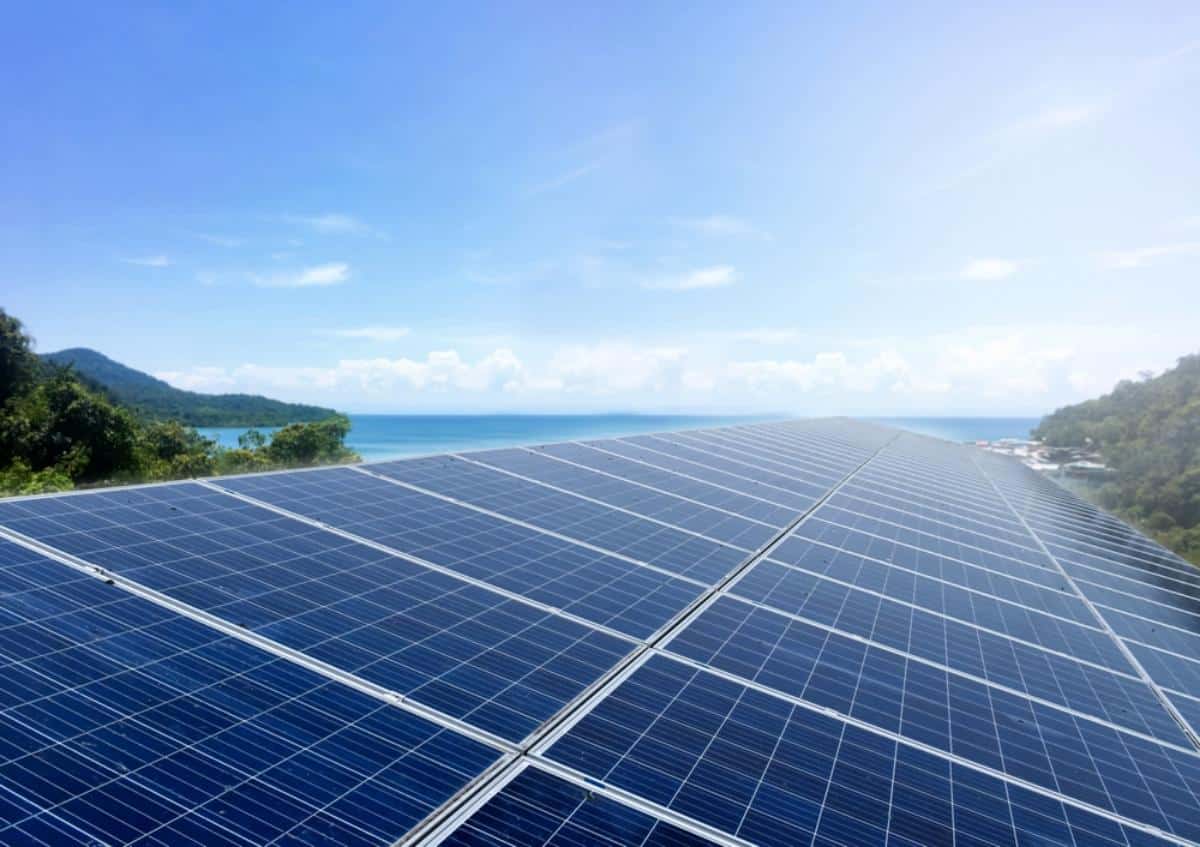
การเลือกรูปแบบโซล่าเซลล์ที่ตอบโจทย์คือการจับคู่เทคโนโลยีให้สอดคล้องกับบริบทการใช้งานและเป้าหมายการลงทุน โดยปัจจุบันแผง Monocrystalline
