Blog

วัสดุและระบบโซลาร์: คู่มือที่ควรรู้ก่อนการติดตั้ง #3

ระบบโซล่าร์เซลล์มีหลายระบบ ควรเลือกติดตั้งให้เหมาะสม

Key takeaway / Summary of topic answer

Selecting the ideal solar solution requires aligning technology with specific usage contexts and investment goals. Currently, Monocrystalline panels are the industry standard, offering the highest value in terms of efficiency and longevity. For businesses and residences prioritizing cost-savings, On-Grid systems remain the primary choice for the fastest Return on Investment (ROI) by reducing peak loads during the day. Meanwhile, Hybrid systems serve those seeking energy security. A precise understanding of hardware and system configurations enables investors to transform vacant spaces into sustainable, profit-generating power sources.

Table of Contents

Classification of Solar Panels (PV Modules)

The cornerstone of any solar energy system is the solar module, which converts sunlight into Direct Current (DC) electricity. Current manufacturing technologies are categorized into three main types based on the semiconductor materials used:

1. Monocrystalline Silicon (Mono)

The most popular and efficient technology today, identifiable by its uniform dark black cells with clipped corners. It is made from high-purity single-crystal silicon.

  • Key Advantages: Efficiency rates of 17–22% or higher; high power output even in limited spaces; longest operational lifespan (25+ years); and superior performance in low-light conditions.
  • Considerations: Higher initial cost, but offers the best long-term value. Ideal for residential use where roof space is limited and aesthetics are prioritized.

2. Polycrystalline Silicon (Poly)

Recognizable by its dark blue speckled appearance, produced by melting multiple silicon crystals together.

  • Key Advantages: Simpler manufacturing process and lower price point. Suitable for large-scale projects with ample space.
  • Considerations: Lower efficiency (15–17%) and higher temperature coefficient, meaning efficiency drops more significantly than Mono panels in extreme heat.

3. Thin Film (Amorphous)

A different technology using thin layers of photovoltaic material deposited on substrates like glass or plastic.

  • Key Advantages: High flexibility, lightweight, and excellent heat tolerance. Ideal for curved surfaces or Building-Integrated Photovoltaics (BIPV).
  • Considerations: Lowest efficiency (7–13%), requiring vast areas to achieve high power output. Typically found in small electronics rather than main power systems for buildings.

System Configurations: Managing Your Electricity

Once the panels are selected, the next step is determining the system configuration based on how you intend to manage the power:

1. On-Grid System

The most popular choice for homes and factories in Thailand due to its rapid ROI.

  • How it Works: Operates in parallel with the utility grid (MEA/PEA). Solar energy is converted to Alternating Current (AC) via an inverter for immediate consumption. If solar production is insufficient, the system automatically draws from the grid.
  • Ideal for: Daytime electricity users (offices, factories, homes with daytime occupants).
  • Pros: Maximum savings, no expensive battery costs, and eligibility for net-metering (selling excess power back to the grid).
  • Limit: Shut down automatically during power outages (Anti-Islanding) for the safety of utility workers.

2. Off-Grid System

A 100% self-reliant system that is completely independent of the utility grid.

  • How it Works: Energy is stored in a battery bank. The inverter draws from these batteries to power appliances.
  • Ideal for: Remote locations without grid access (islands, mountain areas, agricultural sites).
  • Pros: Total energy independence; unaffected by grid blackouts.
  • Limit: High costs due to batteries and requires precise load calculation to ensure power lasts through the night.

3. Hybrid System

Combines the benefits of both On-Grid and Off-Grid: Cost Savings + Energy Security.

  • How it Works: Connected to the grid but also utilizes a battery bank. It powers the home and charges batteries during the day. During outages, it provides power to Critical Loads.
  • Ideal for: Locations with unstable grids or facilities requiring high energy security (medical equipment, servers).
  • Pros: Seamless power during blackouts and flexible energy management.
  • Limit: Highest initial investment due to specialized hybrid inverters and high-quality lithium batteries.

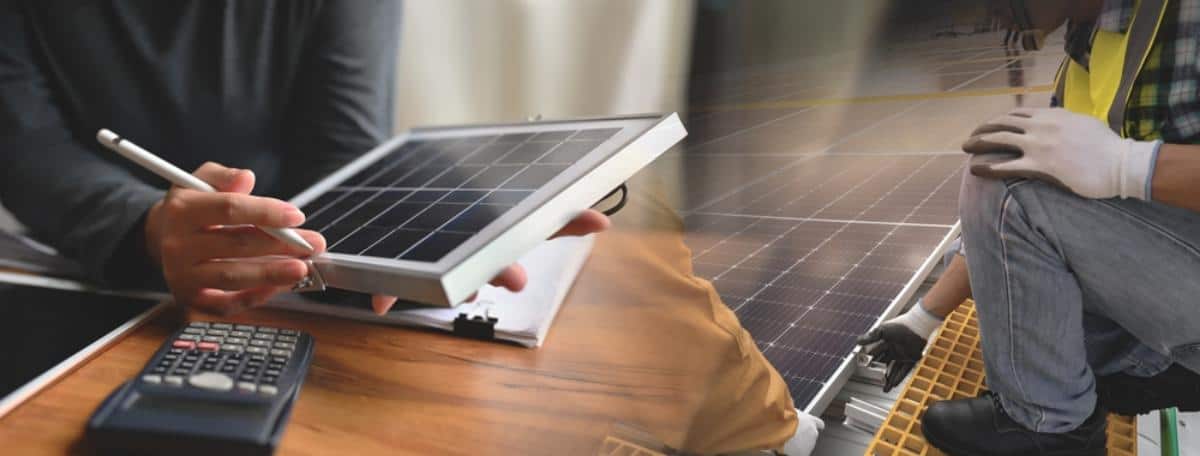
วิศวกรกำลังติดตั้งระบบโซล่าร์เซลล์

Installation Methods

The final consideration is the physical placement of the system:

  1. Solar Rooftop: The most common method, utilizing vacant roof space without occupying usable land. Requires specialized mounting designed for wind loads and specific roof types (Metal sheet, CPAC, etc.).
  2. Solar Farm (Ground Mount): Installed on steel structures on the ground. Ideal for large-scale industrial projects. Offers easier maintenance and better ventilation, leading to slightly better efficiency.
  3. Floating Solar: An innovative solution for facilities with large water bodies (reservoirs or ponds).
    • Advantage: Water provides a natural cooling effect, increasing efficiency by 5–10% compared to land-based systems. It also reduces water evaporation.

Solar PPM: Your Integrated Energy Partner

Solar PPM provides end-to-end solar solutions that can reduce energy costs by 30–40% immediately, ensuring international standards of sustainability.

  • Manufacturer & Assembler: Thai-made panels with international certifications, ensuring superior quality control and cost-efficiency.
  • Multi-Platform Expertise: Specialized in Rooftop, Ground Mount, Floating, and Carport designs tailored to your business structure.
  • Professional Engineering: Managed by experienced engineers to ensure high-level safety and structural standards.
  • Utility-Scale Capability: Expertise in managing large-scale industrial projects with long-term stability guarantees.

Contact us today for a free site survey and professional consultation.

  • Tel: 02-628-6100 ext. 801
  • Email: epc1@solarppm.com
  • Line: @solarppm

Frequently Asked Questions (FAQs)

  • Q: Which system offers the highest ROI?
    • A: The On-Grid system typically offers the highest ROI and fastest payback (3–5 years) as it requires no expensive batteries and directly offsets high daytime utility rates.
  • Q: Why does an On-Grid system turn off during a blackout?
    • A: This is a safety standard called Anti-Islanding. It prevents the system from feeding electricity back into the grid while technicians are working on repairs. Energy during outages requires a Hybrid system with battery storage.
  • Q: What panel should I choose if I have limited roof space?
    • A: Monocrystalline (specifically Mono Half-Cut) panels are best, as they provide the highest power output per square meter.
IMG_2533 - Copy

ติดตั้งโซล่าเซลล์โรงงาน ช่วยลดหย่อนภาษี พร้อมรับส่วนลด 200,000.-

ติดตั้งโซล่าเซลล์โรงงาน ช่วยลดหย่อนภาษี พร้อมรับส่วนลด 200,000.- ราชกิจจานุเบกษา ประกาศ พระราชกฤษฎีกา ยกเว้นภาษีเงินได้ให้แก่บุคคลธรรมดา / บริษัท / นิติบุคคล สำหรับค่าซื้ออุปกรณ์ และค่าติดตั้งโซล่าเซลล์ ลดหย่อนไม่เกิน 2 แสนบาท รัฐบาลมีนโยบายสนับสนุนให้ภาคครัวเรือนและภาคธุรกิจหันมาใช้พลังงานสะอาดมากขึ้น โดยการมอบสิทธิประโยชน์ทางภาษีสำหรับการติดตั้งระบบผลิตไฟฟ้าพลังงานแสงอาทิตย์ (Solar Rooftop) ดังนี้ 1. สำหรับบุคคลธรรมดา (บ้านพักอาศัย)

Read More
แบตเตอรี่โซล่าเซลล์เก็บพลังงานไฟฟ้าที่ผลิตจากแผงโซล่าเซลล์ไว้ในรูปแบบพลังงานเคมี เพื่อนำกลับมาใช้งาน

ข้อควรรู้และวิธีเลือกแบตเตอรี่โซล่าเซลล์ให้คุ้มค่าระยะยาว #2

Key takeaway / Summary of topic answer แบตเตอรี่โซล่าเซลล์คือหัวใจสำคัญของระบบที่ต้องการเก็บพลังงานไว้ใช้ภายหลัง โดยเฉพาะในระบบ Hybrid และ Off-Grid การเลือกแบตเตอรี่โซล่าเซลล์แบบไหนดี ควรพิจารณาจากกำลังไฟที่ต้องใช้จริง อายุการใช้งาน เทคโนโลยีแบตเตอรี่ และความคุ้มค่าระยะยาว ไม่ใช่ดูแค่เพียงราคาเริ่มต้นเท่านั้น เพราะราคาแบตเตอรี่โซล่าเซลล์แต่ละประเภทต่างกันตามประสิทธิภาพและรอบการใช้งาน หากเลือกอย่างเหมาะสมจะช่วยลดต้นทุนไฟฟ้าและเพิ่มเสถียรภาพพลังงานได้อย่างมีประสิทธิภาพ Table of Contents แบตเตอรี่โซล่าเซลล์ เป็นส่วนสำคัญที่ช่วยเพิ่มประสิทธิภาพในการใช้พลังงานแสงอาทิตย์ได้อย่างเต็มที่

Read More
บริษัทกำลังคำนวณต้นทุนและพิจารณาความคุ้มค่าของการใช้มิเตอร์ TOU ค่าไฟ

ใช้อัตราค่าไฟ TOU ดีไหม ? เช็กก่อนเปลี่ยนเพื่อลดต้นทุนธุรกิจ #2

Key takeaway / Summary of topic answerค่าไฟ TOU (Time-of-Use Tariff) คือการคิดอัตราค่าไฟฟ้าตามช่วงเวลาการใช้งานจริง ซึ่งแบ่งออกเป็นช่วง On-Peak ในวันธรรมดาช่วงกลางวันและช่วง Off-Peak ในเวลากลางคืนและวันหยุด การเปลี่ยนมาใช้มิเตอร์ TOU จึงเป็นกลยุทธ์สำคัญที่ช่วยให้ผู้ประกอบการและโรงงานอุตสาหกรรมสามารถบริหารจัดการต้นทุนพลังงานได้มีประสิทธิภาพมากขึ้น โดยเฉพาะธุรกิจที่สามารถโยกย้ายการผลิตไปในช่วงเวลาค่าไฟถูกได้ แต่สำหรับธุรกิจที่ไม่สามารถเลี่ยงการใช้ไฟช่วงกลางวันได้ การติดตั้งโซล่าเซลล์ถือเป็นอีกหนึ่งทางเลือกสำคัญที่จะเข้ามาช่วยตัดต้นทุนไฟฟ้าหน่วยที่แพงที่สุดในช่วง On-Peak ทิ้งไป ทำให้ธุรกิจประหยัดค่าใช้จ่ายได้สูงสุดโดยไม่ต้องปรับเปลี่ยนเวลาการทำงาน

Read More
PDPA Icon
Privacy Preferences

Allow All
Manage Consent Preferences
  • Always Active

Save