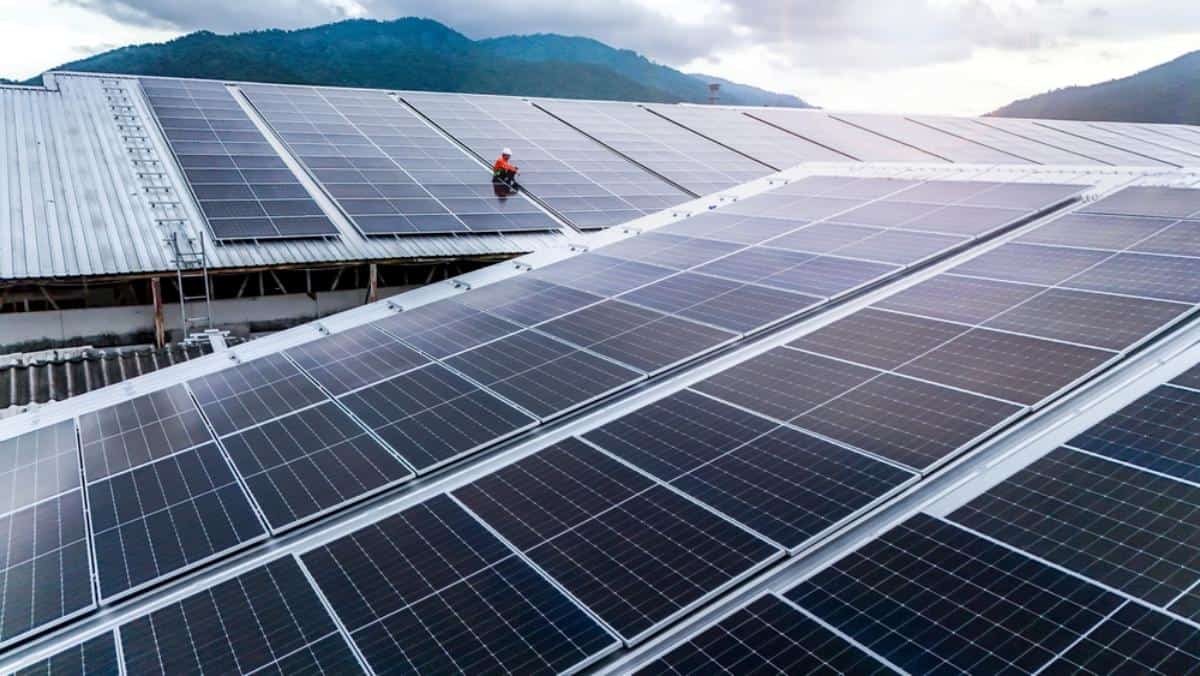
Solar Energy for Large-Scale Offices: A Sustainable Cost-Reduction Strategy #2
ยกระดับธุรกิจสู่ Green Business ด้วยโซล่าเซลล์สำหรับโรงงานขนาดใหญ่และสำนักงาน ตอบโจทย์มาตรฐานความยั่งยืน เพิ่มมูลค่าสินทรัพย์และภาพลักษณ์อาคารอัจฉริยะ

Currently, there are three main types of solar cells available on the market
Commonly referred to as single-crystalline silicon, these cells are easily identified by their uniform dark color and cylindrical-cut edges (diamond-shaped gaps between cells). They are made from high-purity silicon using the Czochralski process, which creates a large cylindrical ingot. The ingot is then sliced into wafers and trimmed to a pseudo-square shape to maximize efficiency and optimize material usage.

Advantages:
Disadvantages:
Also known as multi-crystalline silicon, these were the first solar panels developed using silicon crystals. The manufacturing process involves melting raw silicon and pouring it into square molds, which are then sliced into wafers. Consequently, the cells are perfectly rectangular with a distinctive blue, speckled appearance.

Advantages:
Disadvantages:
Thin-film panels are made by depositing one or more layers of photovoltaic material onto a substrate. Depending on the material used, average efficiency ranges from 7–13%. While they are common in large-scale industrial applications, they account for only about 5% of residential installations.
Advantages:
Disadvantages:
Shorter Warranty: Often come with shorter warranties compared to crystalline silicon panels.
ยกระดับธุรกิจสู่ Green Business ด้วยโซล่าเซลล์สำหรับโรงงานขนาดใหญ่และสำนักงาน ตอบโจทย์มาตรฐานความยั่งยืน เพิ่มมูลค่าสินทรัพย์และภาพลักษณ์อาคารอัจฉริยะ
ยกระดับธุรกิจสู่ Green Business ด้วยโซล่าเซลล์สำหรับโรงงานขนาดใหญ่และสำนักงาน ตอบโจทย์มาตรฐานความยั่งยืน เพิ่มมูลค่าสินทรัพย์และภาพลักษณ์อาคารอัจฉริยะ
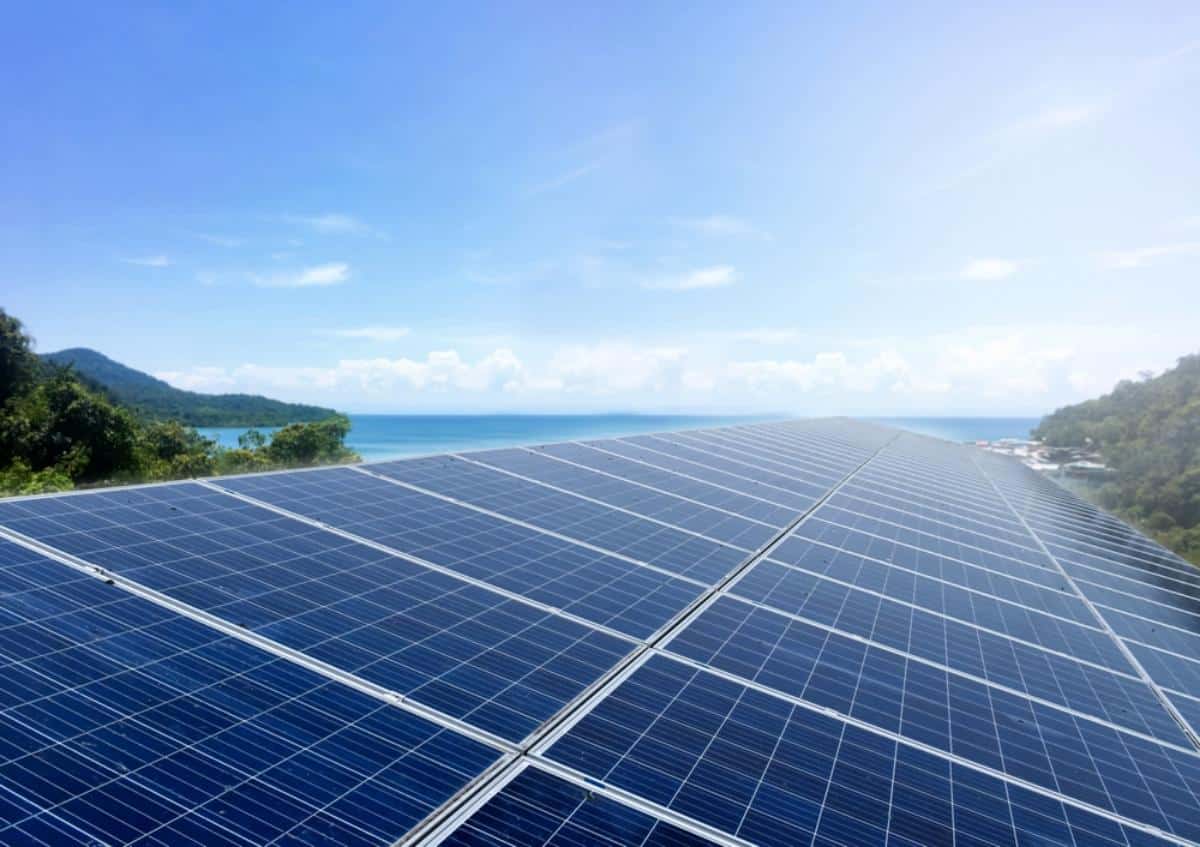
การเลือกรูปแบบโซล่าเซลล์ที่ตอบโจทย์คือการจับคู่เทคโนโลยีให้สอดคล้องกับบริบทการใช้งานและเป้าหมายการลงทุน โดยปัจจุบันแผง Monocrystalline
