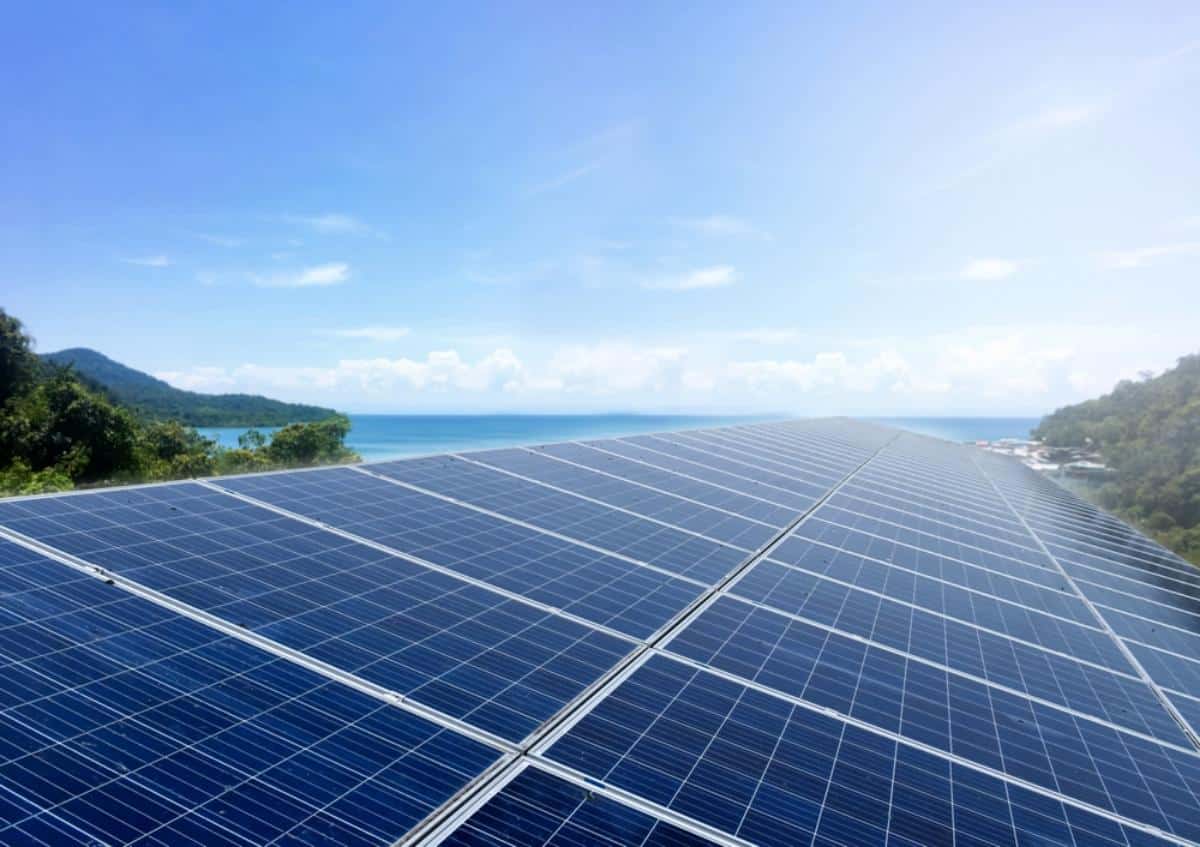
Solar PPM 600W Solar Panels The leading solar panel brand manufactured in Thailand.
Certifications: ISO, IEC, CE, TIS, MiT (Made in Thailand)
Solar PPM utilizes the world’s latest M12 technology, featuring 210mm solar cells—the largest size currently available in the market. Unlike traditional cells which are only 185mm, our G12/M12 cells provide superior efficiency and high power output for over 25 years. This advanced technology reduces the number of required connectors and cables by up to 60%, significantly lowering installation costs.
Core Components of a Solar Panel
1.Solar Cells
- Primarily made of Silicon
- Hese cells convert sunlight into Direct Current (DC) electricity.
2.Glass Cover
- Specialized Tempered Glass that protects against dust, rain, and hail while maintaining high light transparency and extending the panel’s lifespan.
3.EVA (Ethylene Vinyl Acetate)
- A transparent encapsulant that protects cells from moisture and physical impact.
4.Backsheet
- A polymer layer that provides an electrical insulator and protects the panel from rear-side moisture and dust.
5.Aluminum Frame
- Provides structural integrity, eases installation, and prevents mechanical stress or bending
6.Junction Box
- The central hub for wiring, equipped with bypass diodes to prevent reverse current flow and connectors for system integration
Classification of Solar Panels
There are three primary types of solar panels commonly used today:
1. Monocrystalline Silicon Solar Cells
Made from a single-crystal structure (mono-Si), these cells feature a dark, uniform look and clipped corners.
- Advantages: Highest efficiency (19–23%), highest power density (requires less space), longest lifespan (25+ years), and better performance in low-light conditions compared to Polycrystalline.
Disadvantage: Higher manufacturing cost.
2. Polycrystalline Silicon Solar Cells
The first type of silicon-based solar cell, identifiable by its square cells with no clipped corners and a blue, speckled appearance.
- Advantages: Simpler manufacturing process, good performance in high-temperature environments, and more affordable than Monocrystalline.
- Disadvantages: Lower efficiency (13–18%), requires more installation space, and higher overall balance-of-system (BOS) costs.
Thin-Film Solar Cells
Created by depositing thin layers of photovoltaic material onto a substrate.
- Advantages: Lowest cost per panel and easiest to mass-produce.
- Disadvantages: Lowest efficiency (7–13%), requires significant space, and has a shorter warranty compared to crystalline silicon panels.
Cell Technologies: N-Type vs. P-Type
P-Type (Positive)
- Built on a boron-doped silicon base. It is a well-established technology with lower production costs and a maximum efficiency of approximately 23.6%.
N-Type (Negative)
- Uses phosphorus-doped silicon. It is superior to P-Type due to its immunity to Light-Induced Degradation (LID), higher stability, and higher maximum efficiency of approximately 25.7%. N-Type panels generally offer a longer operational lifespan.
Applications of Solar Panels
1.Residentia
Typically utilizes On-Grid systems for daytime savings. While Hybrid systems are gaining interest, high battery costs currently impact the payback period.
2.Industrial
การติดตั้งโซล่าเซลล์ในโรงงานอุตสาหกรรม นิยมติดตั้งระบบออนกริด (Ongrid) แต่ระบบไฮบริด (HybridX) ในปัจจุบันก็เริ่มให้ความสนใจเพิ่มขึ้นเพราะราคาแบตเตอรี่ที่ถูกลง ทำให้มีความคุ้มค่าต่ออุตสาหกรรมที่ใช้ไฟฟ้าทั้งกลางวันและกลางคืน ถือเป็นเป็นการลงทุนที่คุ้มค่าในระยะยาว เพราช่วยลดค่าไฟได้สูงถึง 60% ส่งผลต่อการลดต้นทุน ในปัจจุบันทางภาครัฐให้ความสำคัญกับพลังงานสะอาดเป็นอย่างมากทั้งในเรื่องกฏหมายและการสนับสนุน
3.Agriculture
Widely used for solar-powered water pumps and automated irrigation systems.
4.Solar Air Conditioning
Ideal for Off-Grid use in daytime-focused businesses like cafes and restaurants.
Solar PPM 100% Thai Brand with Global Standards
Solar PPM began as an OEM manufacturer for Global Tier 1 brands such as Trina Solar, Canadian Solar, and JA Solar—all ranked by Bloomberg. Utilizing our expertise, we developed our proprietary Solar PPM brand. Our products meet rigorous local and international standards, including TIS, MiT, IEC, ISO, and UL. Our technology is recognized in the industry as “G12,” matching the specifications of the world’s top-tier manufacturers.
SPPM 450W mono-facial
SPPM 450W high volt
SPPM 600W bi-facial double glass
SPPM 600W high volt
SPPM 610W bi-facial double glass
SPPM 700W bi-facial double glass
Conclusion
Selecting the right solar panel requires balancing technical specifications with system compatibility. It is crucial to choose a brand that adheres to international standards and offers responsive technical support. Solar PPM stands ready to provide expert guidance and reliable solutions for your energy needs.