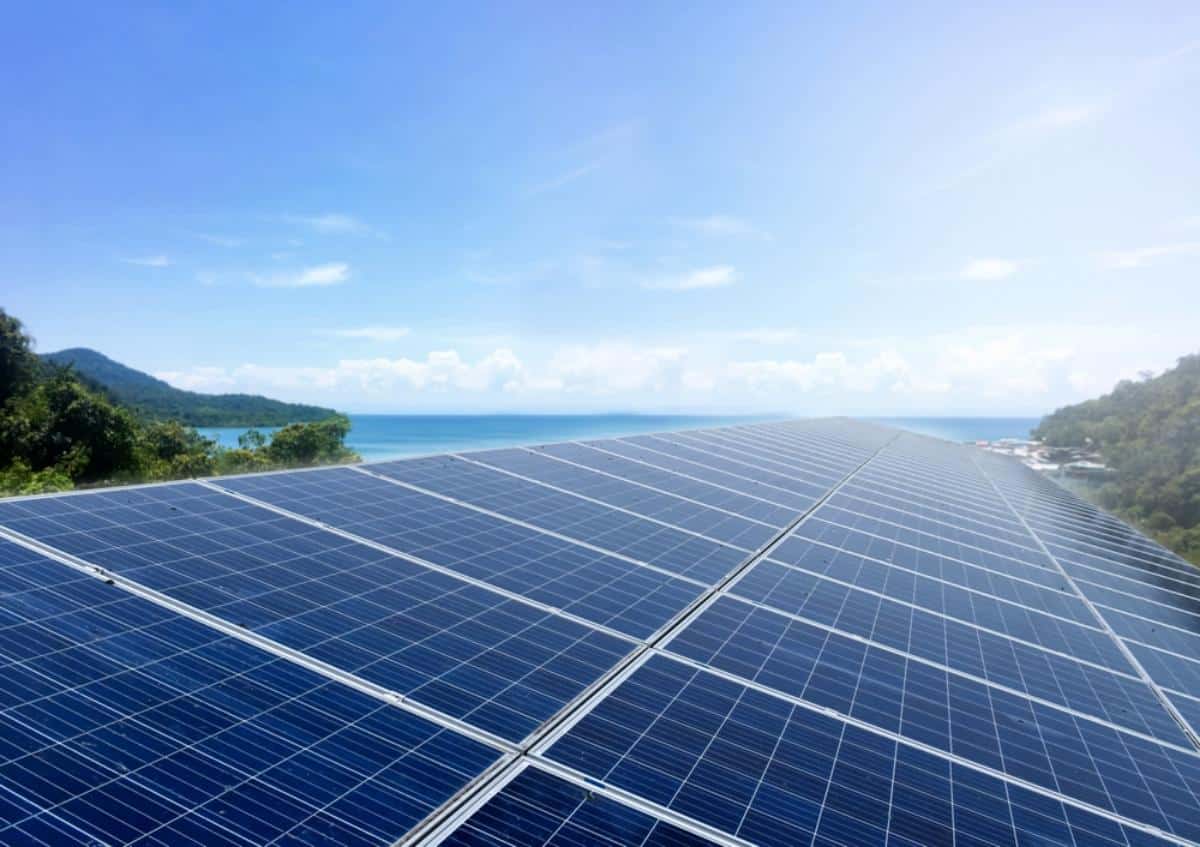
At first glance, the sight is unexpected. Beneath rows of solar panels stretching across open land in eastern Kosovo, a flock of sheep quietly grazes, guided by a shepherd and his dog. What may look like a pastoral scene from the past is, in fact, a forward-looking solution that blends renewable energy, agriculture, and environmental responsibility into one.
At the Rogane solar farm near the small town of Kamenica, clean energy is not the only thing being produced. The farm has found an innovative way to manage vegetation—by replacing fuel-powered lawnmowers with sheep.
From Maintenance Problem to Natural Solution
Maintaining large solar farms requires constant vegetation control. Grass growing too tall beneath panels can block airflow, increase humidity, and affect system efficiency. Traditionally, this work is done using mechanical mowers that consume fuel, generate emissions, and require ongoing labor.
Workers at the Rogane solar farm quickly realized that this approach contradicted the very purpose of clean energy. Keeping the land tidy using fossil fuels felt wasteful and exhausting. That is when a simple but effective idea emerged: why not let sheep do the work?
Rexhep Rrudhani, a 72-year-old local shepherd, recalls how the idea began. “They knew how difficult it was to cut grass in such a large field,” he said. “So they asked if they could bring my sheep here.”
As he directs his herding dogs beneath the panels, Rrudhani smiles at the results. “Sheep eat everything—good grass, bad grass. They clean the land completely. Everyone benefits.”
Today, more than 100 sheep and a few goats graze twice a week among over 12,000 solar panels. The result is a neatly maintained site, zero fuel consumption, and a peaceful coexistence between technology and nature.
A Growing Trend Across Europe
Kosovo is not alone in adopting this approach. Across Europe, solar developers are increasingly turning to sheep as a sustainable alternative to mechanical maintenance. The practice helps solar projects blend more naturally into surrounding landscapes while reducing operating costs and environmental impact.
This idea fits perfectly with Kosovo’s broader energy transition. The country holds one of the world’s largest reserves of low-grade lignite coal, ranking fifth globally. Currently, more than 90% of Kosovo’s electricity comes from coal, with renewables—mainly wind and solar—making up the rest. The government has set a long-term goal to phase out coal entirely by 2050.
According to Arber Maliqi, a solar plant manager, the benefits are clear. “We don’t burn fuel to cut grass anymore. Producing solar power while maintaining land with sheep makes this place twice as green.”
Lessons from Austria and Beyond
Similar success stories can be found elsewhere in Europe. In Vienna, Austria, the country’s largest solar power plant was built on a former gravel disposal site. It now produces over 12 gigawatt-hours of clean electricity annually—enough to power approximately 4,900 households and reduce CO₂ emissions by 4,200 tons per year. This project supports Vienna’s ambitious goal of reaching net zero emissions by 2040.
Sheep have been part of that project since 2021. Initially, 90 sheep were introduced to graze around the panels. Today, more than 150 roam the site between April and October. Elevated panel structures provide shade and shelter from rain, creating a comfortable environment for the animals.
But the sheep do more than just eat grass. They contribute to biodiversity by naturally fertilizing the soil and dispersing seeds and pollen through their wool, helping plant life regenerate across the land.
Agrivoltaics: Energy and Agriculture Together
This approach is part of a broader concept known as “agrivoltaics”—the integration of solar energy production with agricultural activity. Instead of competing for land, energy and farming coexist, maximizing land use without damaging ecosystems.
Agrivoltaic projects are already being tested in places like Colorado in the United States and have shown strong results in vineyards across France. In crop-based systems, advanced algorithms can even adjust panel angles to balance sunlight and water needs. Crops grown beneath solar panels often require less irrigation, while the electricity generated can power irrigation systems.
Although agrivoltaics is still evolving, studies suggest that farmers using this model can increase profits by up to 40%.
Nature’s Quiet Gardeners
France has also embraced sheep for vegetation control, especially after successful trials in Paris parks in 2013. Unlike goats, which tend to eat everything in sight, sheep selectively graze the greenest parts of grass and shrubs. In many ways, they are nature’s gardeners—efficient, gentle, and perfectly suited to the task.
What began as a simple solution to cut grass has become a symbol of how renewable energy can work in harmony with nature. By letting sheep roam beneath solar panels, solar farms are proving that sustainability does not always require complex technology—sometimes, it just takes listening to the land.
Source : the reuters