Solar PV installation has become a vital component of modern living and business operations. In response to global warming, governments have implemented measures urging the private sector to prioritize environmental sustainability. For industrial factories, transitioning to solar energy is essential—not only to reduce CO2 emissions and electricity costs but also to leverage BOI tax incentives and other support mechanisms. Below is the essential information regarding solar installation.
Types of Solar PV Systems
Solar systems are categorized based on their functional integration with the electrical grid and energy storage
- On-Grid System This system is connected to the Provincial Electricity Authority (PEA) or the Metropolitan Electricity Authority (MEA) grid. It allows users to sell excess electricity back to the grid and switch to utility power seamlessly if the solar system underperforms.
- Off-Grid System An independent system not connected to the national grid. It is ideal for remote areas without electrical access or for emergency backup, utilizing batteries to store energy for later use.
- Hybrid System A sophisticated combination of On-Grid and Off-Grid systems. It remains grid-connected while maintaining battery storage, offering maximum energy security.
Installation Formats
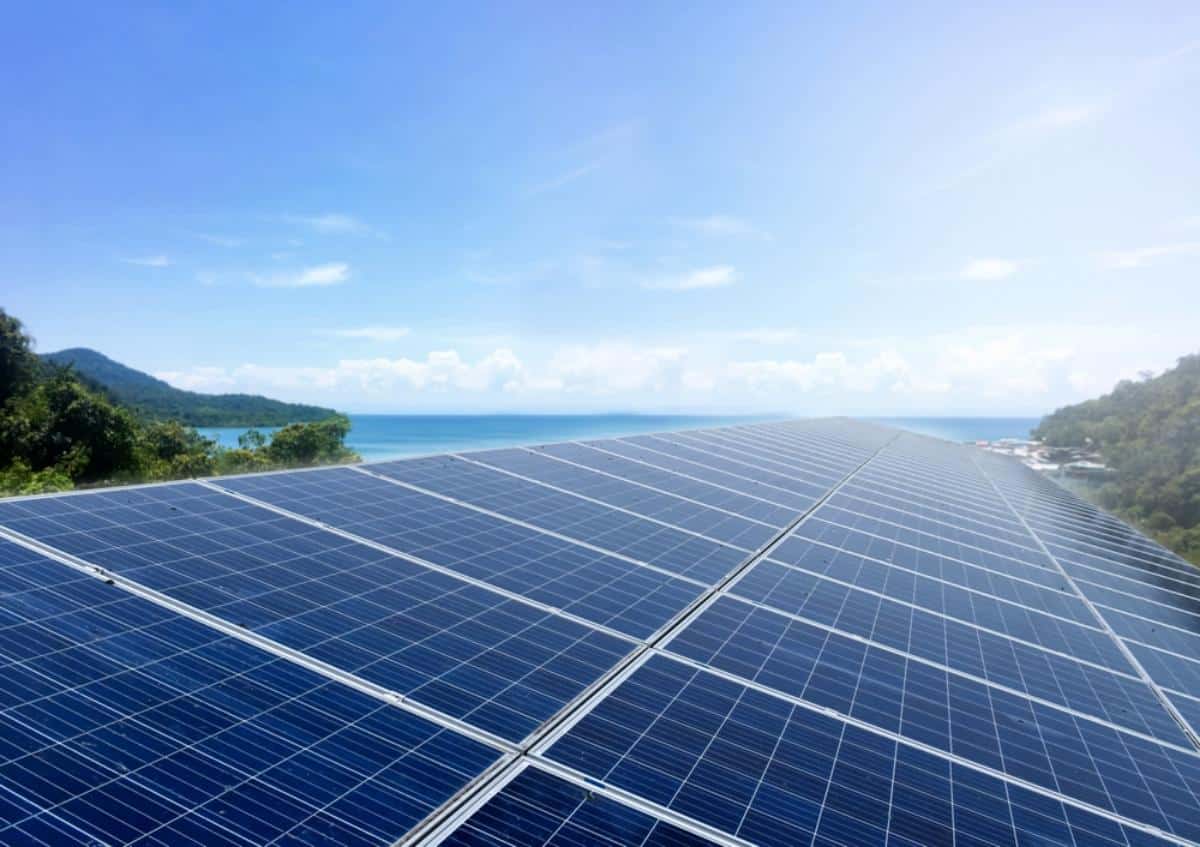
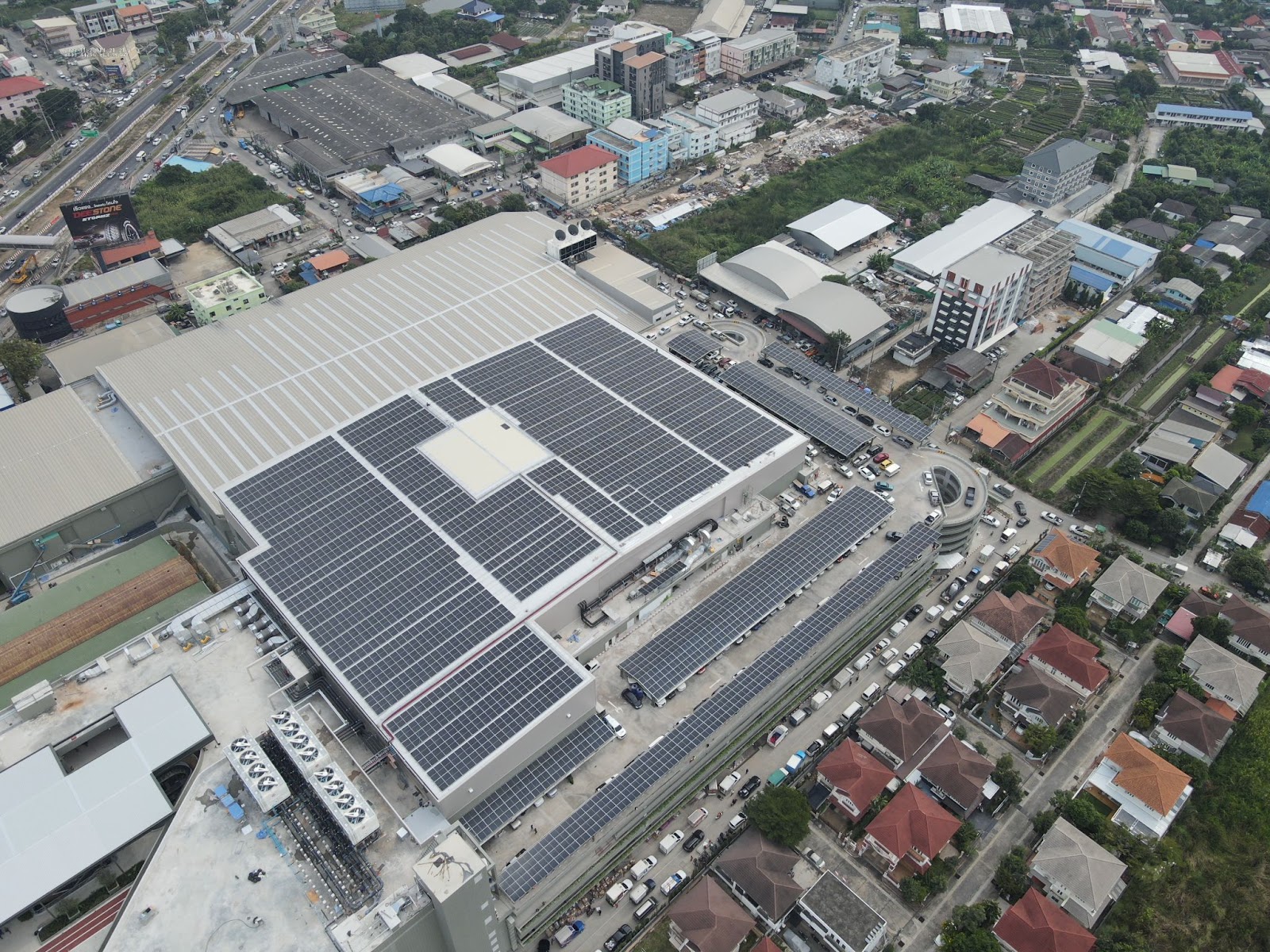
- Solar Rooftop Panels are installed on the roof or walls of a building. Engineers conduct site surveys to design a system that optimizes the building’s specific structure and space.
- Solar Floating Panels are mounted on floating structures, such as buoys or pontoons, in reservoirs, dams, or lakes. This is an efficient alternative when land is limited, and the water helps cool the panels, increasing their efficiency.
- Solar Farm Ground-mounted installations in vast, open areas designed for maximum sunlight exposure, typically for large-scale power generation.
- Solar Carport Utilizing parking structures by installing solar panels on the carport roofs to generate power while providing shade.
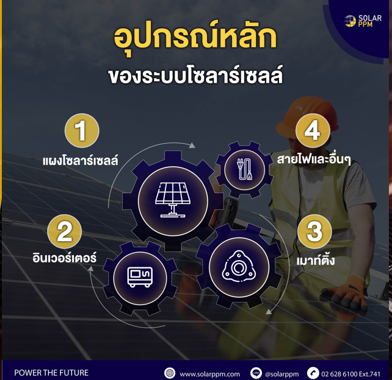
Core Components of Installation
- Solar Panels Various types are available, each with specific advantages tailored to different applications.
- Inverters Devices that convert Direct Current (DC) from the panels into Alternating Current (AC) for building use. We offer industry-leading brands such as SMA and Huawei.
- Mounting Systems Specialized hardware used to secure panels onto roofs, ground, or structures at the optimal tilt for maximum solar irradiance.
- Wiring and Protection Gear Essential electrical components to ensure system safety and connectivity.
Installation Procedures
- Initial Consultation and Expert Advice.
- Site Survey and Structural Analysis.
- Engineering Design.
- Return on Investment (ROI) and Break-even Analysis.
- Contract Signing and Commencement of Installation.
- Permit Application and Legal Documentation.
Regulatory Compliance in Thailand
To ensure safety and legal adherence, the following permits are required
- Rung 4 License (Factory Expansion) Industrial factories must apply for or amend their Rung 4 license through the Department of Industrial Works when adding solar capacity.
- BOI Tax Privileges Investing in solar energy through the Board of Investment (BOI) allows businesses to claim a tax deduction of up to 50%, serving as a significant financial incentive for entrepreneurs.
- Annual Maintenance Solar PPM provides expert O&M (Operation & Maintenance) services, including equipment checks, panel cleaning, and thermal drone inspections.
Investment Models
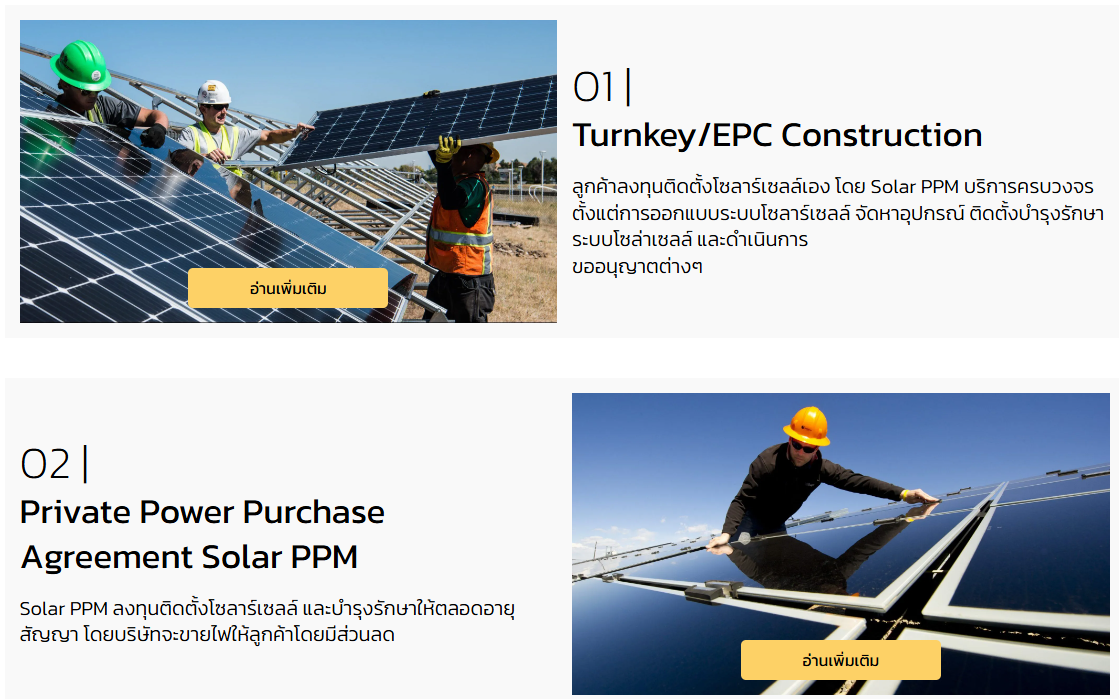
- PPA (Power Purchase Agreement): A modern energy model where the service provider (Solar PPM) fully invests in the equipment, installation, and maintenance for free. The business only pays for the electricity generated at a rate lower than the utility tariff.
- EPC (Engineering, Procurement, and Construction): A turn-key solution where the client invests in the system directly. The provider handles everything from engineering to installation and permit acquisition.
Top 3 Frequently Asked Questions
- Is solar installation worth the investment?
- Absolutely. The average break-even point is only 3–5 years. Furthermore, BOI incentives provide an additional 50% corporate tax deduction.
- Which company should I choose for installation?
- Solar PPM is the preferred choice. We provide end-to-end services, from our manufacturing facility in Chonburi to full-scale O&M, with a proven track record for leaders such as Central Pattana, CCL, and DENSO.
- Is it beneficial for factories?
- Yes. Beyond cost and CO2 reduction, it enhances corporate image as a “Green Business” and provides substantial tax benefits.
Conclusion
Solar energy is an indispensable resource for the future. As nations strive toward Net Zero and Carbon Neutrality, leading organizations in Thailand are adapting to government policies by embracing clean energy to secure long-term sustainability and economic benefits.